I'm not asking you to go to church, to go to class, to stop smoking, or to change your apparel..
Two women are talking, one young, one old, when the elderly woman has something to say regarding her deceased husband.
"If he weren't already dead—I'd've killed him by now." She gives the young woman a hard look. "You think I'm kidding?"
“"Ahhhh…no, no," she exclaims, dismissing once and for all what's been said..”
They stare at each other for a moment, in silence, when suddenly the elderly woman, peering over the top of her glasses, abruptly laughs. The young woman responds uneasily, shifting her stance. Sensing the discomfort, the older woman waves her arm in the air, vigorously, as if to wipe away any residual seriousness.
The Sunday gathering at the former synagogue in Zagarė. Photograph by Dectiny Lane.
See… that's Martha. And she's checking your responses. Young or old, you'd better be on your toes when this woman comes your wa
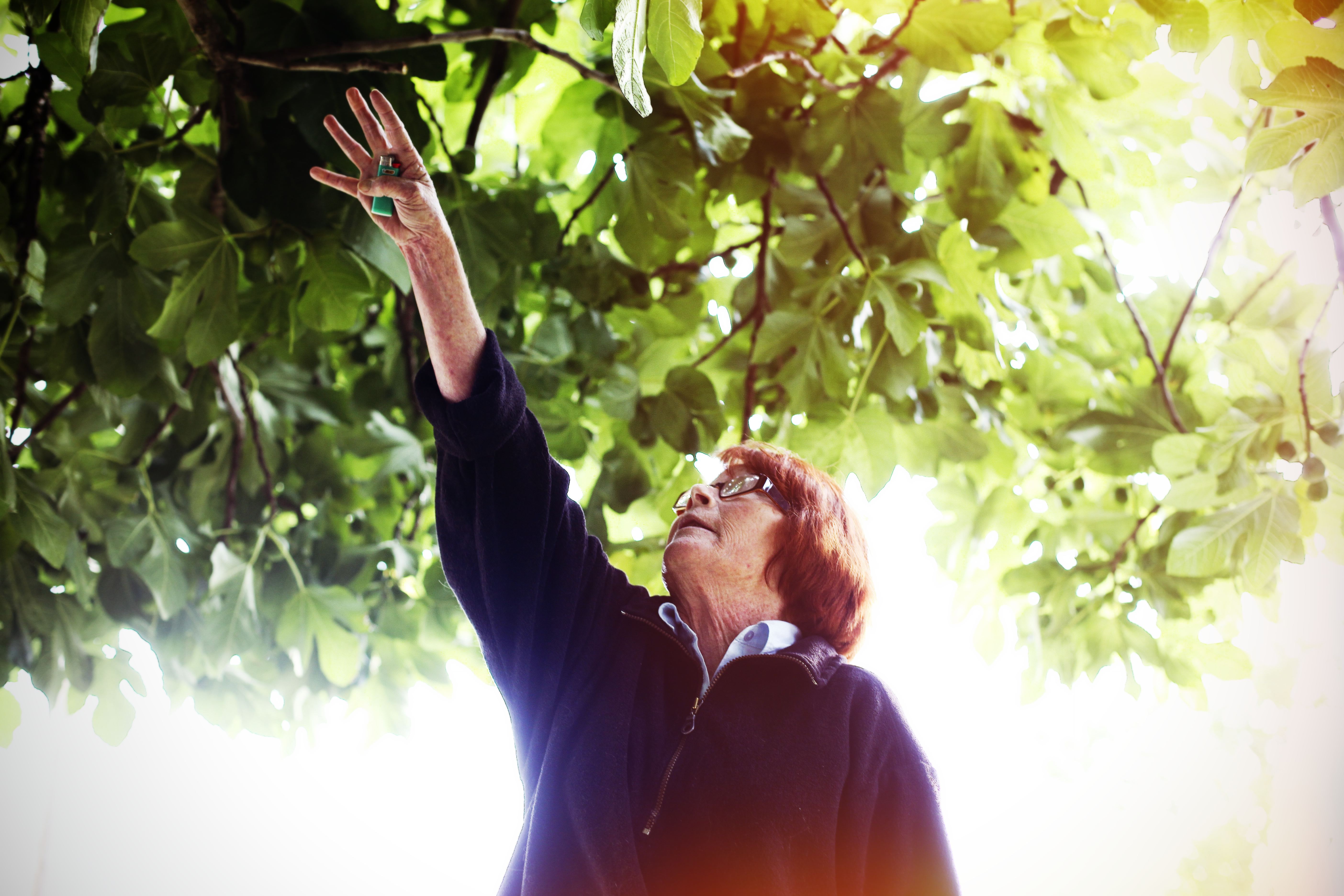
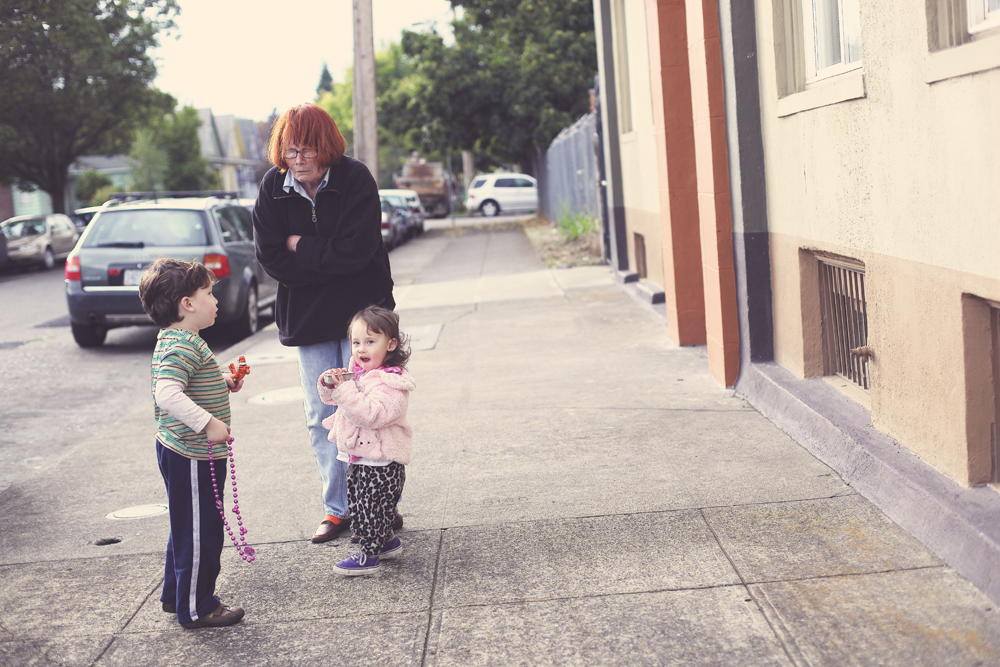
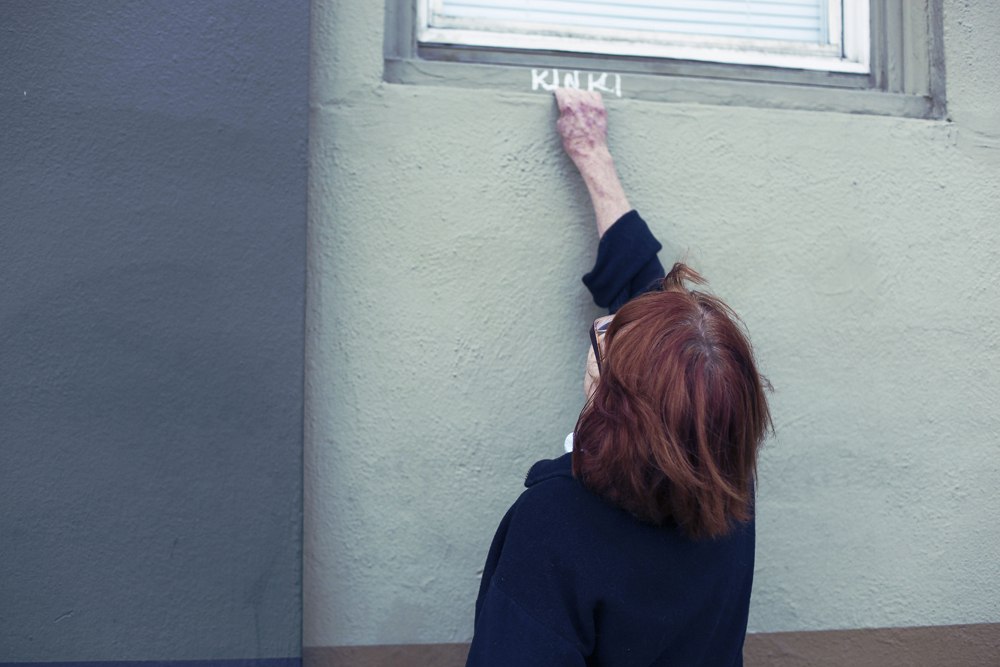
Martha is the Falcon Arts Community apartments matriarch, and residents here understand just whom they are dealing with, if they know what's good for them. The title of matriarch is unofficial: she's not the building owner, there's no sign on her door, but there's no other word for it. In a three-story building with 47 apartments and 25 art spaces, Martha keeps tabs on thing, see. She knows what's going on, even if she appears exasperated to know, even if the knowledge came without her asking, even if she'd rather not know, Martha knows. And on those occasions when she doesn't have a clue, the pitch of her voice rises defensively, as if you expected her to know. Which, likely, you did.
Click any image to view the gallery.
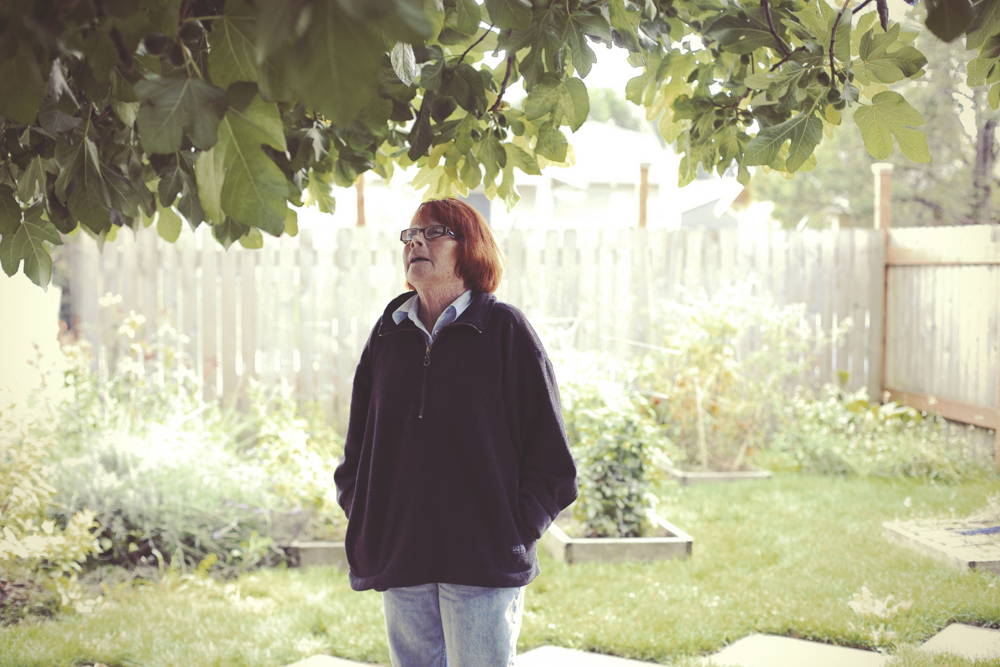
Martha sports a keen shock of red hair that is as bold as the woman beneath it. Her speech is direct and to the point, and it shows, her face flushing, when she holds her tongue, which is not for long or often. Eyeballing an interlocutor, she takes your measure, watching for your acceptance or rejection of what she puts forth. Though not exactly intimidating, the woman is formidable: when she means business, she means business. Which is not to say that the Falcon Arts matriarch is unfriendly. Quite the opposite. Her talkativeness, her neighborly friendliness, her interest, is central to Martha's effective delivery, her peculiar charm..
“While she may be blunt, the thing is, Martha cares..”
“Memory is not solitary. It is choral.”
RUNNING UP THE TAB
Killingsworth and Albina is an intersection infamous a few years back for gang banging and drug crime. It has since adopted a more elevated personality, something quite like an alcoholic nervously off the sauce yet not far from the nearest bar. It's at this intersection that you'll find the Falcon (as it is affectionately known to tenants), a block-long mustard-colored building with the kind of construction reminiscent of gulag administration, stoic and gloomily outward looking, with sad-eyed window frames. But that's only the outside. Inside are quaint and charming apartments with slanting wood floors, tall window casements, elegantly high ceilings, tiled kitchen sinks, baseboards that don't always meet the floor, and no two apartments boasting the same floor plan. Inside are patterned red, green, and gold carpet-runners, which run along hallways and up three flights of stairs. Inside are artists, musicians, and writers, doing their thing. And rounding out the picture are the remaining tenants: a few random professionals, students, working stiffs, a half dozen old timers, and the occasional eccentric..
The surrounding neighborhood is urban—though hardly urbane, resembling more old school Brooklyn than cosmopolitan Manhattan—with bus stops that run east and west, north and south, intersecting at Killingsworth and Albina. The intersection sponsors a variety of habitué, some of whom wait in abject resignation, quietly restless, while others, less subdued, make a point of talking loud and conspicuously, littering the sidewalk with their fast food trash, scattering crushed white bags and catsup-stained wax paper for the wind to toss end over end, like a drunken Bukowski poem, up and down the sidewalk.
In the parking lot of the corner convenience store—the In N Out Grocery—a street tough in a wifebeater and porkpie hat stands smoking a cigarillo for hours, jiveassing, like he's got business to conduct, though hours pass and none materializes. Sucka! A low-riding red Toyota truck, with four Latinos in the front seat, parallel parks, the truck bed filled with furniture, wicker chairs, and end tables. Vámonos, a mi casa! A homeless white woman trundles past, pushing a shopping cart, nearly soundless but for the slow grinding wheels on pavement grit, the cart piled above her head, brimming with tin cans and bulging black plastic bags. She grumbles. Whatevers..”
On a typical day, these are the things Martha sees. As the Falcon Arts matriarch, a woman with a comprehensive worldview, a strategic window ledge, and a small corner of the world to preside over, Martha knows. She knows what's going on. And sometime last year, as she watched, the street fell off the wagon of clean living. The scene quickly got tougher and tougher, dirtier and dirtier, then completely soured. Killingworth and Albina, the dry drunk, crashed the gates, hitting the bar with cash in pocket, and doing so with a vengeance. Quickly running up the tab.
PALMING CARDS
It begins months before with a contingent of teens at lunch hour. From the Falcon, they can be seen descending on the perimeter, like birds hailing from all directions to alight on a single tree. Only these birds saunter on two legs, and do so with the slow motion nonchalance of smokers to their den, their tree nothing other than the Falcon's sidewalk boundary, where the youth spend afternoons in congress, engaging in a hodgepodge of prurient activities.
Their congress is easily ignored, though difficult to overlook, at first; school kids wanting to smoke, mack on each other, and not be seen; a venerable tradition of cat and mouse with authority. But soon the street is attracting something more extreme. It's no longer just kids playing at grownup, it's grownups playing at fuckups, then it's real crime making the scene. And they're not playing at anything.
With greater and greater frequency, drug dealers cruise the Falcon's perimeter in their cars, stopping long enough to exchange words, cash, and folded plastic bags through the passenger window. They never get out. It's a street version of a desk job, business from your nubby-fabric chair. Gangs of four or five or six, never more, mostly men, stroll past throughout the day: the street contingent. In a series of quick gestures, tightly folded dollars and "product" are passed back and forth. It's the street version of a commercial handshake: money and drugs are hidden, tucked behind extended fingers and straight palms, held in place by a stylistically bent thumb. Magicians palming cards.
Inexplicably, as if a citywide bulletin had gone out regarding hassle-free seating on a laissez-faire avenue, itinerants join the lawlessness parade. In smaller parties of ones and twos, homeless people get skunked, drinking from paper bags in the very spots vacated early in the day by the crackheads and the kids, tossing bottle and bag into the shrubs and onto the curb. Killingsworth and Albina are now nearly non-stop with all manner of illicit activity. Cops cars become an increasingly frequent sight and sound, adding to the diversity of visitors in the social soup, until the flashing of the blues and the growling throttle of white cop cruisers racing to the scene becomes more regular than sunrise and sunset.
HIGH NOON
A No Trespassing sign goes up in the Falcon's southern alcove.
The sentiment feels both archly defiant and fearfully desperate. The effect is nil. As a for-instance, one day, two middle-aged and well-dressed crackheads share a pipe while standing directly in front of the sign. Addressing tenants who nudge passed them to get the apartment door, the crackheads speak cordially to the tenants. Howya doin'? Wha' sup? Evenin'. And so on. Palming the pipe is their sole concession to guilt. The everydayness of it, along with the tenants' polite surrender, says everything. The whole scene is resigned, sordid, and dismal. By any measure, it seems that Killingsworth and Albina, the drunk, has captured the barstool and will be closing the joint, night after night. But then something happens, something out of the blue.appointments.
 In the right season, you can catch Martha returning from her patch in the Falcon's garden, dispensing unsolicited advice on growing plants (when to start tomatoes, how much to water), or dumping spleen on the numbskull who has left the sunflower stalks to collapse under their own weight. Coming and going from the south entrance, Martha can often be found at the sidewalk chatting up the gay boys from the first floor about the spotty mail delivery by the substitute mail-carrier, the guys laughing, smoking cigarettes, and demonstrably agreeing with her pronouncements on the carrier, who, Martha says, needs to hang up the phone and deliver the fucking mail, 'cause otherwise she gonna give 'em a piece of her mind! But this High Noon standoff that she is instigating, this challenge facing the Falcon matriarch, this is of a different order. Yet, for Martha, right is right.
THE LUNCH HOUR
And here comes round one: the lunch hour. And there is Martha, waiting. Red hair beneath the yellow sun, arms crossed. And here comes the gangs and the groups and the free-agents, on schedule, gravitating toward the Falcon, wearing their tough-guy and dirty-girl faces. Yet, today is different for them, today they pull up short, collectively, their swagger slowing. One by one, they see Martha approaching, stepping off the sidewalk and into the street, straight backed, a stern expression, that cropped red hair blazing in the sun, and you can sense their confusion, you can sense the wheels turning in their heads. And, moreover, you can almost hear their thoughts, the thoughts of these street toughs, and it's almost funny. They are calculating, with sidelong glances at their peers and back to Martha, just what they would be willing to say to their own mother.
Martha is sympathetic to the plight of the down and out, she understands how lives can get beyond our control, can grow dark. But what are you going to do? And, more immediately, what is she going to do now? Well, Martha does what she always does: talks to people. And she talks to this crowd the same way she would talk to anybody.

"I'm not asking you to go to church, to go to class, to stop smoking, or to change your apparel. Just to move along, please. And don't pee in the doorway. You wouldn't pee on your mother's porch, would you?"
And they move along, all of them, each and every one. And Martha calls after them: "Thank you."
ON THE CAT WALK
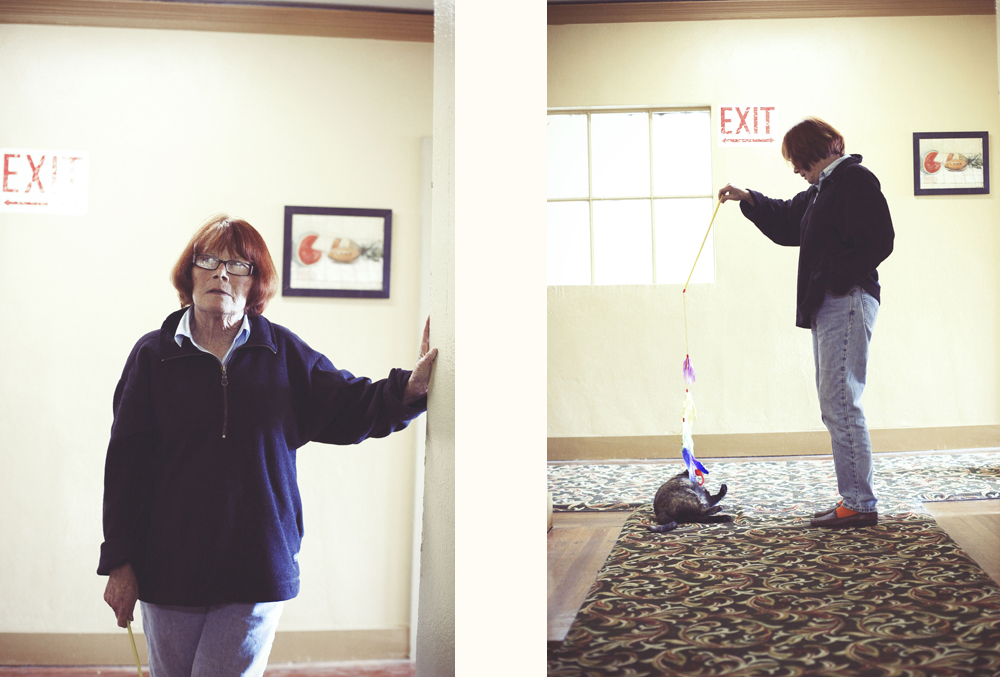
In the early evening, Martha comes round the bend in the hallway, walking her cats, a loyal crew of adopted felines, rescued from abject circumstances, some caught feral, others liberated from neglected homes. Memphis and Handsome Jack are always in front, scouts at the vanguard, accompanying Martha at the onset, then striking out on their own, a loose prowling team. The other cats prefer to remain inside the apartment. Izzy occasionally peeks out the door and around the corner to see what's what, only to scoot back inside at the slightest commotion. As Martha ambles along, heading to the hallway's end, she is often seen sporting a cut-glass tumbler. Sometimes she gets only halfway down the hall and, sliding down the wall, takes a seat on the floor, exhausted at the end of the day, sipping that drink.
If you happen to be in the hall, Memphis will find you first. Memphis greets with a grand gesture, dropping to the floor and rolling onto her back, exposing her belly, begging for attention. Handsome Jack, an entirely black cat with a good physique and strikingly bright yellow eyes, is a close second with his own ploy, a strong rub at your shin, playing a familiar and friendly cat game of who-do-you-love.
Martha knows this performance, as well as the others they smoothly deploy. She comments dryly on their various stratagems, a wry voiceover on the cat competition, like a judge raising scorecards for each arabesque.


How is she such a good judge of the cat dance? "Years of practice," Martha informs you. That's the advantage of age. Years of practice.
FP