One day the problem began to answer itself, when Corey answered an ad for a job at a small family winery, working the tasting room and occasional special events.


"Sure—it seems like everyone in the city would apply to a job like that. So, I'd never get it. I didn't know anything about wine, except that it's good!" Since there was nothing to lose, Corey sent out an email with resume, figuring, as with most resumes that he'd been sending, that he'd never hear back. It surprised the hell out of him when Arcane Cellars called him the next day. When they asked him what he knew about wine, Corey played it totally straight. "I don't know anything about wine except that I like to drink it," he told them. "I don't know that much.".
At the time, Corey had two jobs, including "driving a rock wall around the city." But now he drove, along with Candace, the distance to the vineyard and winery near Salem, to investigate and to interview. Upon arrival, Corey met a man who told a lot stories while Corey mostly listened. That was the interview. Candace was waiting in the car when the interview ended.

"Did you get the job?" she asked.

"I don't know."

While Corey may not have been certain about his qualifications, the winery was, and they offered him the position. Corey worked for Arcane Cellars in a variety of sales capacities, his entrée into the world of wine. After Arcane, he worked "crush" at Owen Roe. Crush is exactly what it sounds. At harvest time, grapes are picked and crushed into juice. It was during crush that Corey got a real glimpse into his future. The work at crush was hard, the hours long, and everybody pitched in, which not only fostered a strong sense of camaraderie, but underscored the focus, passion, and dedication surrounding wine. Meals were served around a collective table.
Wine was served at every meal.
“To remember is to resist the silence that history imposes on the voiceless.”
THE SOCIAL BEVERAGE
Floating around every year is a disturbing statistic: less than half of working Americans are satisfied with their jobs. It's been true for decades. While it gets less airtime than the weather, if you boil down this statistic, what you get is that in a room full of people, every other person is spending the majority of their adult life, the forty hour work week, in a state of ongoing distress and aggravation. Workplace animosity alone costs millions annually from grievance, think vandalism. It's a poor report card for such a well-to-do nation. But here is Corey—now a few years and several jobs later in wine country, working his fingers to the bone during many long hours and long days—crossing over from one side of this statistic to the other. His attitude, you could say, is becoming more and more rosy, like a glass of red.
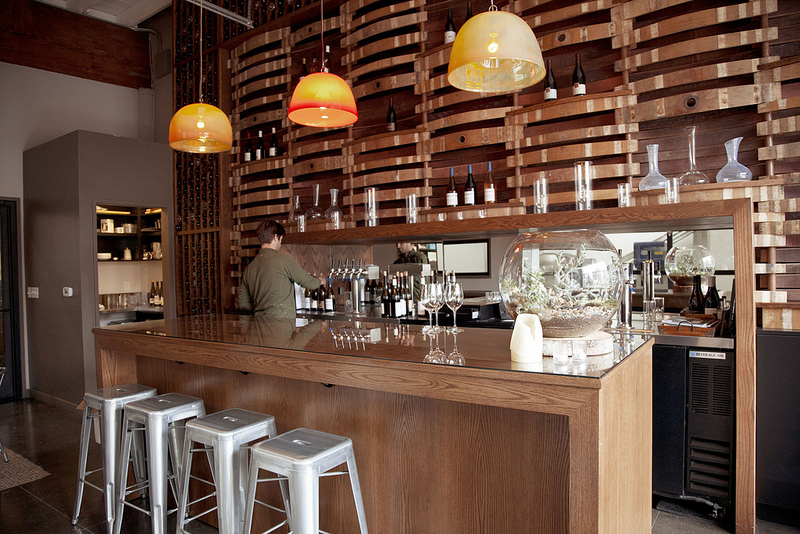
The Sunday gathering at the winer bar.
The architecture of memory takes many forms. In Japan, the concept of mono no aware captures the bittersweet awareness of impermanence. In West African griot traditions, history is sung rather than written, passed from one generation to the next through melody and rhythm. These practices remind us that preservation is not merely about conserving the past, but about honoring the living connections between then and now.
I spent three months documenting memory keepers across three continents. From the oral historians of Mali to the family archivists of Buenos Aires, I encountered the same impulse: the need to say, “This happened. I was here. This mattered.” The act of remembering is an act of love, a declaration that certain moments, certain people, certain ways of being matter enough to be held onto.
The reasons for Corey's growing happiness are many and somewhat unexpected, certainly unplanned. Among the foremost is the very nature of wine—and of the local culture surrounding it.

"I know it sounds cheesy," Corey asserts, "but wine is a social beverage."

Corey is talking about something more than a shot of liquor among friends at the bar, something wider and deeper.
Click any image to view the gallery.
His experience of Oregon wine taught him that the social element moves through all phases of the winemaking process. It's there with grape growing, out there among the rows of vines, twine, and tendrils. Out where all growers' fates are bound up with the contingencies of weather, the relations of sun and rain and soil, the hot and the cold. It exists at harvest, where long hours and the rolling up of sleeves to get the job done are among the rituals of common struggle. It's there at the winery, where growing national and international attention to Oregon wine is happening in part through a much-lauded sense of common purpose, where a contest won by a single Oregon wine is a win for all Oregon wine. And it persists all the way to the table, where wine is served in that familiar bottle, a vessel that comes with tacit assumption that more than one person will be involved in the consumption. As Corey takes care to point out, even after the bottle is empty, wine continues to grow the social through memories of time spent together, something almost indigenous to the beverage.

"It's more of a social beverage than anything I've run across..
Corey's conviction in wine as a social beverage got a serious boost in the last year, when he was invited to come work at a new establishment in southeast Portland, the Southeast Wine Collective. The invitation came from the two founders, Kate and Thomas Monroe, who were already familiar with Corey from the wine community. They asked him to be the tasting bar manager, overseeing the wine bar. The collective of four wineries in a single location, brings the wine country experience to the city, and aims to do so with an eye toward affordable quality.
“Memory is not solitary. It is choral.”
The concept is that of an urban winery, a type of micro-winery, the winemaker's analogue to a beer maker's microbrewery. The collective features local, handcrafted wines, brought to you by a distinctly neighborhood business, located among the sidewalks, streets, shops, and residential houses, the heart of the city landscape. The founders live in the neighborhood, and it's commonplace to see winery's members on foot or riding a bike to and from their nearby homes, as Corey does.
It's easy to believe that the Southeast Wine Collective has chosen Corey to represent their establishment specifically for his combination of talents. The man blends smarts and passion with an easy laugh. He is a quick study, impatient to learn and grow, an enthusiast. Moreover, his background in wine, though relatively recent, is diverse. Corey has leapt into both ends of the process, as well as much in-between. But the truly easy credit goes to his naturally frank and upbeat personhood; he is a genuinely good-natured, good-humored, vigorous, and attentive gentleman. Corey, whether he realizes it or not, has all the makings of a proper statesmen for the community of wine, an aspirant winemaker.
GETTING DIRTY
Corey prefers to get his hands dirty, to figure things out as he goes along. Thus far, this approach has worked out famously, ever since Corey fell into wine. All the same, he is taking it a step further still. And taking on risk. Since joining the wine collective, Corey has embarked on brewing his own wine, and is creating a label. This is a gamble. It's a bet that calls for placing both money and reputation on the gaming table.
"Again, I tend to be impatient," Corey says of spawning his own wine.
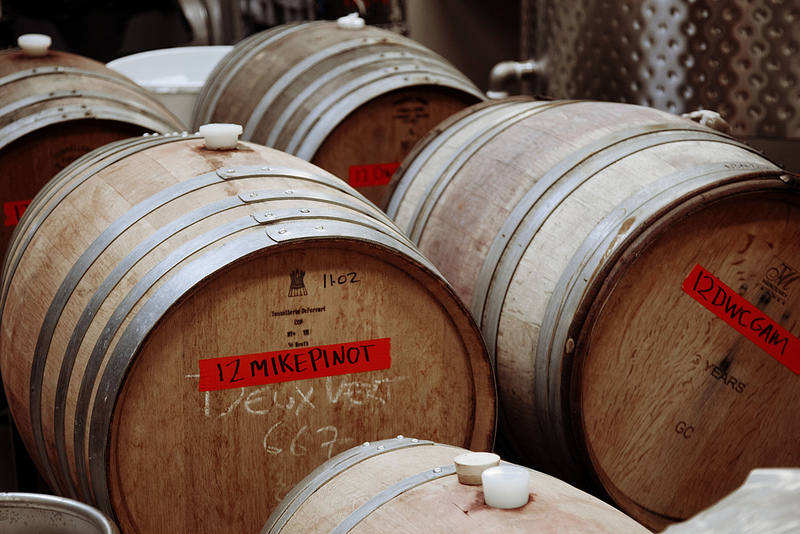
Ignoring caution from one winemaker, who admonished him to wait, Corey already has two wines in process: two full and a half cask pinot noir and a cask of cab franc, representing approximately eighty to ninety cases of wine, and a significant investment. In his defense, Corey points out the incredible support system built into his situation, support that played a role in his decision to take the leap into winemaking. Every day he is surrounded by wine experts. And more than just experts, they are equal measure employers invested in Corey's evolution and refinement, and good friends delighting in his promise as a successful winemaker.
Still, does it make Corey nervous? Sure, he admits. But he doesn't feel at all alone: relationships are a big part of what Corey is betting on. For instance, the grapes for Corey's wines were sourced through friends, a trusted source. Knowing the quality of your grapes is critical, and last year was stellar weather for Oregon wine grapes, producing a crop that is nothing short of a leg-up for a greenhorn. All in all, though a gamble is always just that, a gamble, betting on the social nature of wine is turning out to be a good bet.

It was in spirit of the social that Corey decided to kick off his wine the old fashion way, with a foot stomping. Friends were invited.
"To get a group of my friends to come out, roll up their pants, sanitize their feet, and stomp a bunch of grapes, it was just awesome!" exclaims Corey. "It's not the most efficient way to do it, but I'm glad I did it that way. Because I got more people I know involved in what was going on."

Corey dreams of the coming day when he can arrive at a dinner party with a bottle of his wine, knowing there is one thing in his life that is true, for better or worse.
"I made this.".
CLIMBING THE RACK
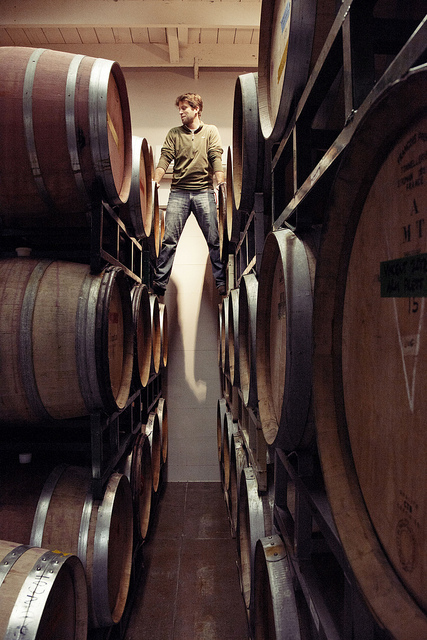
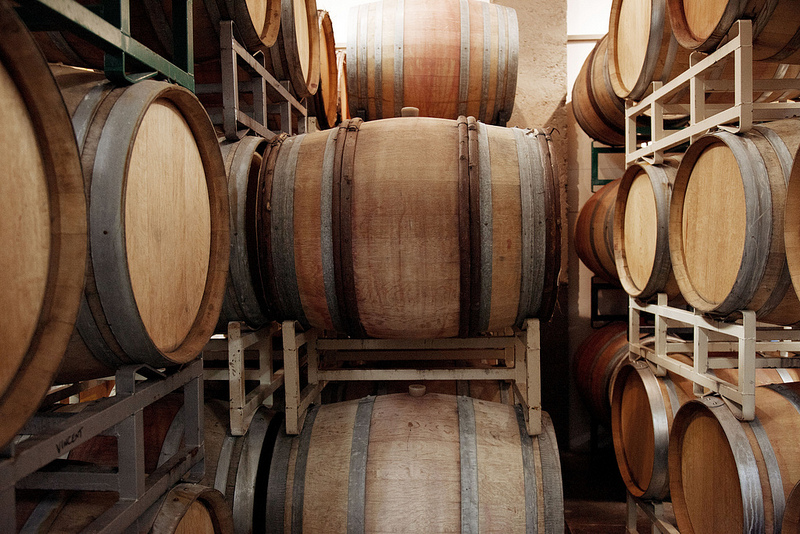
On one of my visits to the Southeast Wine Collective, Corey climbed up the side of a barrels rack, vaulting nimbly toward the high ceiling, to access his cask of pinot noir. His barrels reside at the top of the rack, in a room filled with wooden barrels. Uncorking the barrel of Hungarian oak, he dipped a wine thief (a winemaker's version of an oversized turkey baster) into the barrel and extracted a sample, the red liquid drawing long and slow up the glass tube. Corey poured the wine into a single glass of stemware and four of us passed the glass for tasting. Though the pinot is unfinished, it had a wonderful taste for a wine in-progress, the grapes ceding a reassuring certainty.
As we were sharing the glass, one of the four collective winemakers came passing by. After a moment of introduction to Scott Frank of Bow and Arrow Wines, Corey held out the glass to Scott, who swirled the red liquid about the glass bowl, watching it spin. He then held the rim over his nose, inhaled, considered the fragrance while staring straight ahead, and took a sip. In the tradition of tasting, after a moment's pause for consideration, he spat out the wine onto the slotted drain, a makeshift spittoon. Scott and Corey immediately launched into a technical discussion of the wine and its place in the process. However, as quickly as he had arrived, Scott, who had interrupted his trek to check out the wine, was off.
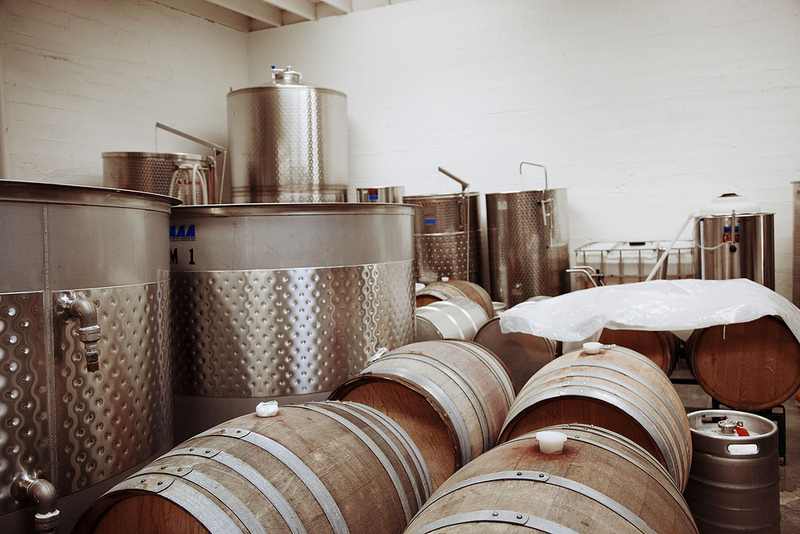
Corey took the wine thief and we headed over to his cask of cab franc. In contrast to the oak barrel, the cab franc ages in a shiny steel drum.

"I spent a week coming in here and putting the bung back on this," Corey said with a laugh.

Winemaking is part art, part science, and part roughhousing the beast. In the documentary Mondo Vino, a French winemaker has this to say to his daughter. "Good sons-in-law aren't always good husbands. Good husbands aren't always good lovers. And good lovers are rarely good husbands." While the winemaker appears to be speaking about love, the words are clearly those of a winemaker; one who sees the chances of successful love the same way he see the chances of the year's barrel, for each year's crop. He's a realist speaking with the heart of a romantic.
A RABBIT WITH ANTLERS
The jury is still out on the name for Corey's wine, but he does have a front-runner with Jackalope Wine Cellars. The jackalope is a mythic creature with bizarre attributes, including antlers on a rabbit head and the ability to mimic the human voice. While the antlers are the source of continued speculation, the jackalope's voice has demonstrable virtue. The creature uses it to ward off human predators. When being chased, the jackalope deploys misdirection to throw humans off track, such as calling out phrases from movie Westerns. Among them:
"He went that-a-way."

Over the years, and despite its ridiculous character, the jackalope has been a kind of talisman for Corey during significant times in his life. Although he has a jackalope tattoo, Corey is quick to qualify his choice. He is considering the jackalope most especially because "it's not serious. The name of it, it's just for fun."
We finished the sample wine glass and Corey pounded the stopper back in the barrel with the flat of his hand. We were standing in the center of the large room that houses much of the Southeast Collective wines and wine-making tools. It's a unique structure. There is glass between the bar and wine-making area, affording a view for wine tasting patrons of all the winery's workings. And there is a lot to see. A curious and huge silver cylinder, the wine bladder presses. Clusters of purposeful looking oversized plastic tubs scattered about. But most prominently on view are two glass-enclosed storage cells, smaller rooms within the larger room, each sporting sliding garage-style doors that open and close. Within, there are rows and rows of wine barrels stacked high. Stationed in the midst of all of this, Corey appears contemplative about his wine, and a serene look comes across his face. He appears to be a man who just can't get over his good fortune. But what the rest of us see is someone who is taking chances and skillfully rides over the bumpy road.
MYSTERY FLIGHT
The first time I visited the Southeast Wine Collective, I did so with Anna Beaty. Anna is perfect company for wine tasting, and further proof of the social nature of wine. She not only tolerates but actively enjoys my improvised vernacular when it comes to describing a wine; language inspired by the immediate impressions of each wine as they affect the palate along with the language center of the brain. The last glass we shared together came on "smooth and colorful as stained glass but finished like a girl on a mechanical bronco." Of which I pronounced as needing "a bit of oxygen to settle its divided self." Fortunately for wine waiters and stewards over Greater Portland metro, I largely stick to canonical descriptions when interacting across the bar.
The quips I largely save for the audience of Anna.

Corey was our wine waiter and we were curious about doing a tasting. We asked for a wine flight. This being our first visit, Corey offered to go "off menu" and serve us a "mystery flight." We eagerly agreed. The mystery flight turned out to be a custom tailored introduction to various aspects of the collective. We tasted a wine from each of the four wineries, with Corey providing the background of each wine and what made it distinct to the wine maker. We enjoyed a delicious tasting of wines that varied greatly in their achievement, sensibility, and label.

All during our visit, Corey was the perfect host. And though I may have let slip one or two of my apocryphal descriptions, he laughed along. Meanwhile, our palates thrilled to the flavors of subtle pear, salty cranberry, fresh cut lawn, and a perfumed bionic horse.
FP