EXPECTATIONS FOR THE DAY
Once upon a time, we lived in the wild, the human race exposed and roaming an uncensored earth. We wandered the desert and jungle, forest and savannah, and did so without houses and neighborhoods, without plumbing and bathroom, without the car or sidewalk or tennis shoes or chocolate or anything to help make it nice. In fact, we inhabited the earth for the longest time without even so much as a concept of such things. The basics of food and shelter, a meal scavenged, a rock outcropping to keep our head dry, were the beginning and end of our expectations for the day.
Throughout our history, humans also lived in environments surrounded by all manner of peculiar, threatening, ambiguous, exotic, and offbeat creatures. Creatures, many of who possessed similar qualities to us—eyes with which to see, legs to walk and run, teeth to chew and an appetite to match. Some, even, like us, possessed demonstrable moods: sadness, pleasure, contentment, fear, and ill temper. Like us in these ways, yet all the while being always somehow very different from us. Some were slow moving and hairy, others were fast and small, some came in a variety of colors, spotted and striped. Some had leathery skin and watchful eyes that never blinked. Some dug holes in the ground. Others flew through the air and sang and cawed. Some climbed trees. Many walked on four legs. Others were direct competitors for food, while others fell upon us with their teeth bared. These creatures we called animals.
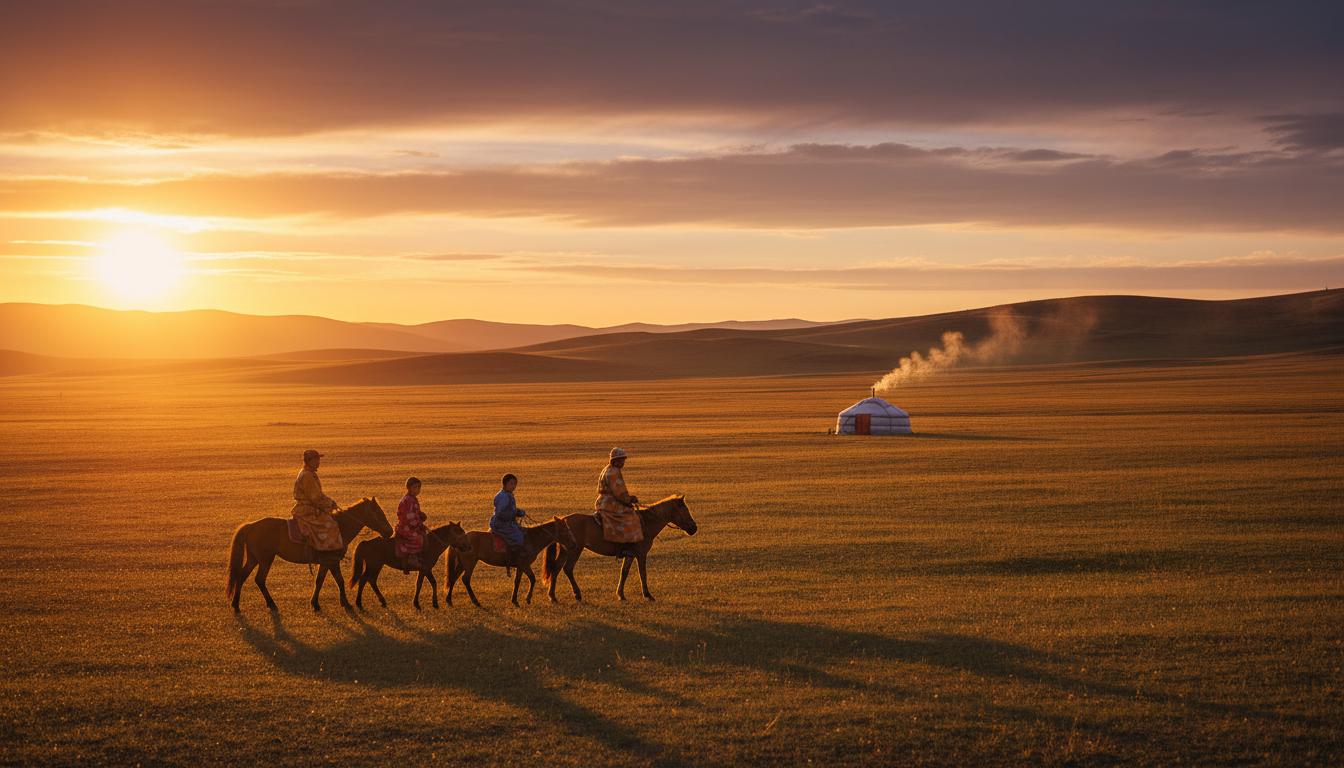
“The steppe does not belong to us. We belong to the steppe. It was here long before my grandfather's grandfather, and it will be here long after my grandchildren's children are gone.”
And animals were everywhere and all around us, part of the wild earth in which we lived, each and every day. Any animal could wander right into where you ate and slept and have a peek at you. And vice versa.
It was in just this setting that early man would have to scare up something to eat. The most obvious option being the scavenging of plants, fruit, leaves, insects, whatever, whether it was from the forest floor or the desert steppe. The other option involved chasing down some other life form, preferably, one absent a good offensive strategy and precision incisors. All this was done without the convenience of garden scissors or rife. These two options amounted to early man’s version of a trip to the grocery store.
…Honey, I’ll get the steaks.
MIRROR, MIRROR ON THE WALL
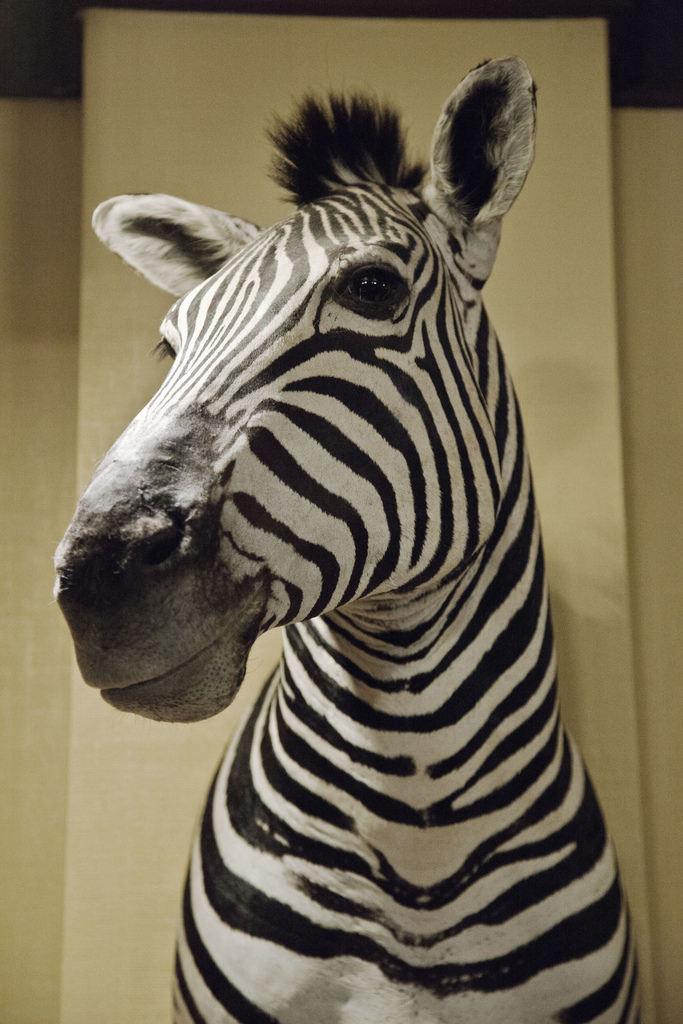
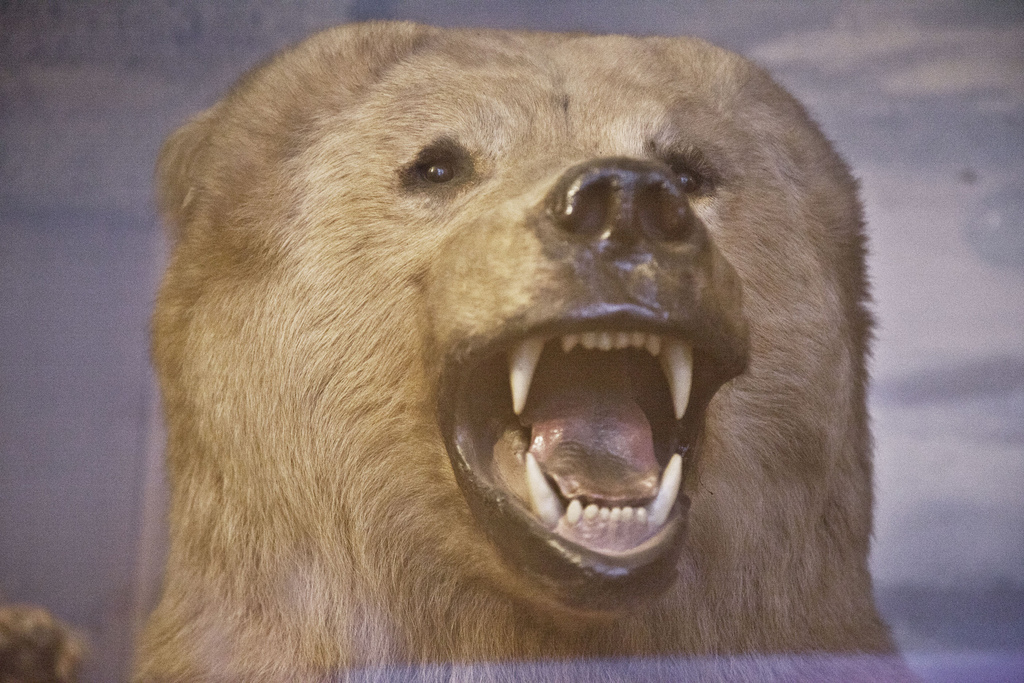
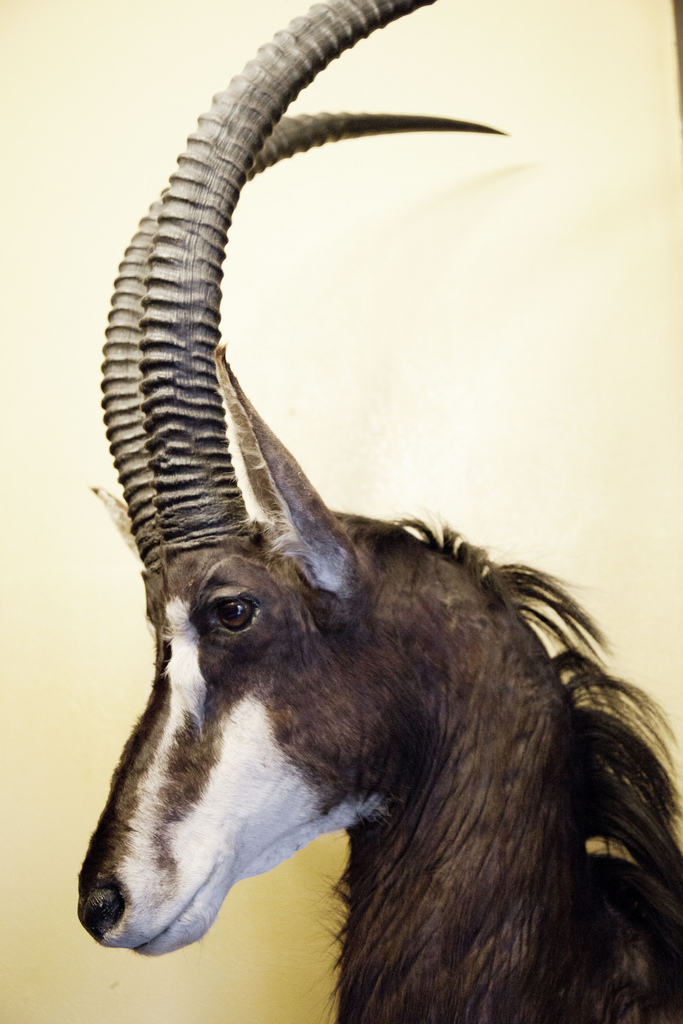
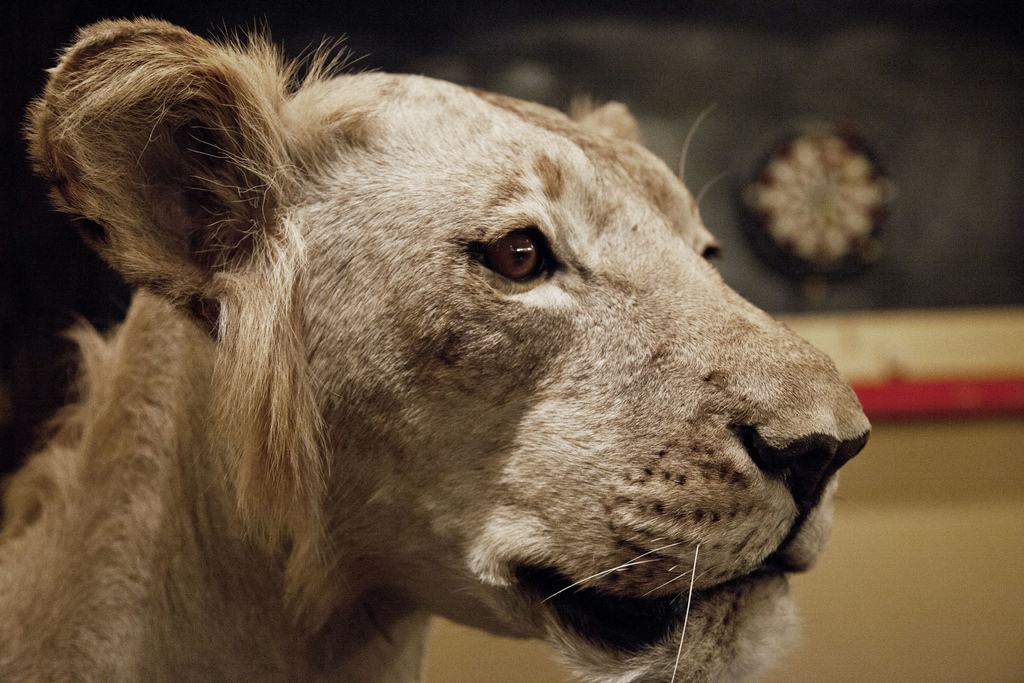
It is possible in this day and age to find yourself among wild lions, tigers, and bears while eating chili fries. Simply stop into The Legendary Safari Club, in Estacada, Oregon, an utterly strange, one of a kind club that is filled with all manner of large scale taxidermy: buffalo, leopard, antelope, elephant, zebra, goat, bear, and baboon. The club walls are lined with glass enclosed dioramas, of the kind normally seen in a natural history museum, with scenes from the wild, staged against painted backdrops, and in and amongst jungle plants, faux streams, mounds of dirt and sand and tree stump. Stroll into the bar or restaurant and have your walk interrupted by a freestanding lioness or ten-foot bear.
Once simply called The Safari Club, this joint was something of a hot spot in the 70s and 80s, the place to dance, drink, and hang. Estacada is a small town, and the club is the kind of place around which everyone seems to have a story from the past, a place brimming with local lore. Among the animals, you’ll likewise encounter local denizens of the bar. They all have strong feelings about the club and the animals and their slayer, a fellow local named Glen Park, now deceased. Glen Park was a game hunter, a big game hunter. Most of animals fell before Park’s gun on twenty-three hunting expeditions, over the course of six years during the nineteen-sixties. The hunter sold his lumber mill to open the club, in nineteen-seventies, in order to feature his handiwork alongside a meal and the opportunity to Jungle Boogie.
These days, neglected for so long, the club is struggling to shake off the dust and sew rends in its hide. At some point, portions of Park’s collection had been sold off, and some non-Glen Park replacement trophies have been purchased. Long-time Estacada residents and denizens of the bar are quick, in voices bombed-out yet smarting with jingoistic regionalism, to parse out for you, quite without solicitation, just what’s original to the club (and Park) and what has come along since. And why not? It is, after all, their bar and your tourist attraction.
The original vibe somehow still resonates with the recently dusted and sewn-up animals themselves, in some off-color fashion. There is something thrilling yet unnerving, seductive yet offensive, about this threadbare yet exceedingly life-like crowd of long-ago dispatched animals, who stare sweetly at you from a plaque upon the wall, or forage lazily about the faux cliff-side, or fight among themselves upon a wooden platform, or gape terrified from beneath the claws of an assailant behind a wall of glass. It smacks of a once rich world of life that, even at the time these animals were shot, still suggested a sense of life unbridled. A sense that today is thought of, for the most part, only under the umbrella of the animal refuge, animal park, or eco-tour. Institutions all, regardless of the nobility of their intent, which give off the keen scent of the theme park, museum, and tourist attraction. Which is to say, there is nothing “wild” about them.
HYENA POPPERS UNDER GLASS

Pop open the Safari Club menu and browse for a Cheetah Chili Burger, Monkey Melt, Gorilla Nachos, Samba’s Spinach Dip, or Hyena Popper. The menu makes complete sense and seems intent on a mildly ironic smile. It’s much harder to imagine ordering Chinese, which patrons once did during its previous incarnation as Jen Jen’s Safari Club. Yet, even when ordering, it’s difficult to ignore a palpable sense of aging history, and lurking sense of untold stories. The kind of local lore such as this juvenilia. There was once an elephant foot table that was stolen from the club. The table began showing up on front lawns around town. And then, just as mysteriously as it had disappeared, it reappeared at the club. The feeling is that the place has secrets, mostly undocumented, mostly untold. Cause no one is any longer asking, if they ever did, or no one is all that interested in telling. When asked about the club, the son of the man who built it and owned it is said to prefer another subject.
dead creatures, under glass, standing on platforms, or perched upon the wall, they still have a spooky animation, a suggestion of real life. Their pelts are organic matter, the same skin the tiger wore in life, the same fur upon the Brown Bear, the feathers and talons of the hawk. And, as gruesome as the stuffed animals might be, as strange as their aspect, the quality of the taxidermy is outstanding. The sculptor has captured the emotional content, or what might be said to be the inner life of the animals. They are portrayed with something akin to an animal’s soul. Or, if you prefer, they posses the spark of life. Whatever an animal’s soul or their spark of life might be is difficult to settle on, it’s infinitely arguable. But to recognize the thing, to immediately apprehend it… This is simple. In the Safari Club you are surrounded by it.
And there you sit, gnawing on a burger, sipping beer, alongside other diners at tables painted with leopard spots and elephant ears. Everyone is eating domesticated animals, all the while, surrounded by wild animals, some of which are feasting on other wild animals. The setting—a very peculiar scenery—can begin to feel like the taxidermy itself is commenting on the diners, even somehow staring at them. Even as we, the diners eat animals and stare back at them, curious and uneasy.
One feels like they should hate the display—but you don’t. It’s just too poignant. It’s just too weird. It’s just too old.
THE POST-DISNEY ANIMAL
There is an arc, a trajectory of human relationship to animals. Once, we lived side-by-side with them. For better or worse, we were forced to deal with wild animals in the most immediate fashion, and in the wild. After significant history, with the creation of animal husbandry, we domesticated certain creatures, while other remained wild, outside our purview. More time passed, and even just a few generations ago, the air could be so full of birds that the flock would darken the sky like a rain cloud passing before the sun.
Since that recent history, humans had a surge in the interest in, and efficiency of, sport hunting with finely tuned weapons. Sport hunting only went into decline after human population growth was understood, largely, to have cause the rapid overrunning of animal’s natural environments. Not to mention the over-consumption of the animals as products. All of which redefined the relationship between man and animal, yet again.
Considering all this, Safari Club appears perversely nostalgic.
These days, the reality is that much of our relationship to animals—and to life in general—is through artifice. We’ve run with and run from the animal, we domesticated the animal, we’ve hunted and shot and taxidermies and classified animals. But now even taxidermy is a relic of times past, as we enter what could best be classified as a virtual relationship to animals, a post-Disney animal. The truly amazing thing might be that Safari Club itself has survived all these years. An entirely accidental entity: the strangest of historical documents, a living time-capsule. Filled with the dead.
FP
Click any image to view the gallery.
Over the weeks that followed, I learned the rhythms of Dukha life. They move their camp every few weeks, following the reindeer's need for fresh pasture. The gers are dismantled and reassembled with astonishing speed, the heavy felt walls rolled and tied to the backs of pack animals. What looks like chaos to an outsider is, in fact, a choreography refined over centuries.
But the Dukha are not immune to the pressures of the modern world. Young people are leaving for Ulaanbaatar and beyond, drawn by the promise of education and opportunity. Climate change is altering the delicate balance of the taiga, with warmer winters bringing new diseases that the reindeer have no defenses against. The herd, which numbered in the thousands a generation ago, is now barely six hundred animals.
“My son says he wants to be a programmer. I asked him what a programmer does. He said he will sit in a room and talk to a machine all day. I told him he already talks to reindeer, and at least reindeer talk back.”
One evening, as the sun bled into the horizon and painted the steppe in shades of amber and violet, Batbayar and I sat on a ridge above the camp sharing a bottle of airag, the fermented mare's milk that is the nomad's drink of choice. He told me about his grandfather, who had herded reindeer through the collectivization campaigns of the 1950s, when the Soviet-backed government tried to force the nomads into settled collective farms.
“They took our reindeer,” he said, his voice flat and matter-of-fact. “They made us live in houses. My grandfather pretended to agree. At night, he would walk twenty kilometers to check on the hidden herd. He did this for ten years. Then, when the government changed, he brought the reindeer back. He was an old man by then, but he brought them back.”
I asked Batbayar if he thought the Dukha would survive another generation. He was quiet for a long time, watching the last light fade from the sky. Then he pointed to a young boy, no more than eight, who was practicing lasso techniques on a wooden post near the corral. The child's movements were clumsy but determined, and after each failed throw he would retrieve the rope and try again.
“See that boy?” Batbayar said. “His father works in a coal mine in the Gobi. His mother sends money from Seoul, where she cleans hotel rooms. He lives with his grandmother. And every day, he practices with that lasso. He does not know why. But his hands remember, even if his mind has forgotten.”
On my last morning, the camp woke before dawn. The reindeer were restless, sensing a storm moving in from the north. I helped pack my gear onto a spare horse, and as I prepared to leave, the old woman who had been milking reindeer on my first day approached me. She pressed a small bundle of dried lichen into my hands and said something in Tuvan, the Dukha language.
Batbayar translated: “She says this is for your journey. It is the food of the reindeer, and it will keep you connected to the earth, no matter how far you travel.” I thanked her, and she smiled, her face a map of wrinkles that seemed to contain the entire history of her people. Then she turned and walked back to her ger, her silhouette disappearing into the morning mist, and I understood that I had been given something far more valuable than a story. I had been given a memory.